
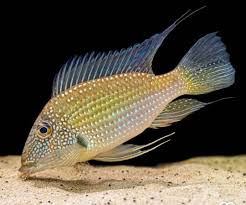

Satanoperca leucosticta (Whitespot Earth Eater)
Satanoperca leucosticta is a peaceful South American cichlid known for its beautiful iridescent blue-green spotting and natural sand-sifting behaviour. As an "earth eater," this species constantly takes mouthfuls of substrate, filtering out food particles before expelling the sand through its gills. Their calm temperament and fascinating behaviour make them a popular choice for large South American community aquariums.
These fish thrive in groups and display their best colours when kept in spacious aquariums with fine sand substrates and excellent water quality.
Care Sheet
Scientific Name
Satanoperca leucosticta
Common Name
Whitespot Earth Eater
Origin
South America (Amazon and Orinoco River basins)
Adult Size
20–25 cm
Tank Size
Minimum 450 litres for a group
Water Temperature
24–30°C
pH Range
5.5–7.5
Water Hardness
1–12 dGH
Diet
Omnivore
Recommended foods include:
- High-quality sinking pellets
- Cichlid pellets
- Frozen bloodworms
- Blackworms
- Brine shrimp
- Mysis shrimp
- Insect larvae
- Occasional vegetable-based foods
Compatibility
Peaceful and best kept with:
- Other peaceful South American cichlids
- Larger tetras
- Silver dollars
- Corydoras
- Plecos
- Peaceful catfish
Avoid:
- Aggressive cichlids
- Fin-nipping species
- Very small fish that may be viewed as food
Behaviour
A peaceful schooling cichlid that should be kept in groups of at least 5–6 individuals. They spend much of their time sifting through sand in search of food and establish loose social hierarchies. Keeping them in groups helps reduce stress and encourages natural behaviour.
Aquarium Setup
- Fine sand substrate is essential
- Large open swimming areas
- Driftwood and branches
- Smooth rocks
- Dim to moderate lighting
- Strong filtration with good water movement
- Regular water changes
Breeding
Satanoperca leucosticta are maternal mouthbrooders. After spawning on a flat surface, the female collects the eggs into her mouth where they are incubated until the fry become free-swimming. Breeding is most successful in soft, slightly acidic water and mature groups.
Difficulty Level
Moderate
Lifespan
8–12 years with proper care.
The fine sand substrate is one of the most important requirements for this species. Gravel can damage their delicate gill structures and prevent natural feeding behaviour. Excellent water quality and regular maintenance are essential to keeping these beautiful earth eaters healthy and displaying their best colours.