
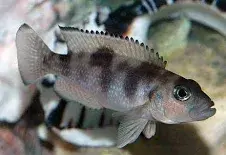
Lepidiolamprologus hecqui — Hecqui Cichlid
Family: Cichlidae
Origin: Lake Tanganyika, Central East Africa
Size: Up to 8 cm (3.1 inches)
Lifespan: 5–8 years
Natural Habitat
Environment: Rocky shorelines and shell beds in shallow to moderate depths
Water Conditions: Clear, highly alkaline, and mineral-rich
Temperature Range: 24–27°C (75–81°F)
Physical Description
Body Shape: Slender and elongated with a slightly pointed head
Coloration:
Pale beige to silvery body with faint vertical banding and a slightly darker head region
Males are more vividly colored and may show more defined patterning
Sexual Dimorphism: Subtle; males are slightly larger and may exhibit more intense coloration
Note: This species is sometimes confused with other Lamprologines due to similar shape and habitat. It is one of the few Lepidiolamprologus species adapted to shell-dwelling behavior.
Aquarium Care
Tank Size: Minimum 60 litres (15 gallons) for a pair or small group
Water Parameters:
pH: 7.8–9.0
Hardness: Hard to very hard (12–20 dGH)
Temperature: 24–27°C (75–81°F)
Water Flow: Gentle to moderate
Substrate: Sand or fine gravel
Décor: Provide ample empty snail shells (e.g., Neothauma) or ceramic equivalents, rocks for cover
Filtration: Efficient biological filtration with stable water conditions
Diet
Type: Carnivorous
Preferred Foods:
Frozen and live foods such as brine shrimp, bloodworms, daphnia
High-protein micro pellets and quality flakes
Feeding Frequency: Small portions 1–2 times daily
Behavior & Tank Mates
Temperament:
Territorial, especially around shells
More aggressive during breeding
Compatible Tank Mates:
Other small Tanganyikan shell dwellers (e.g., Neolamprologus multifasciatus)
Avoid large or overly aggressive fish
Behavior Notes:
Best kept as a bonded pair or in species-only tanks
Will defend their territory vigorously but are generally not overly aggressive in community setups
Breeding
Spawning Method: Shell spawner
Breeding Conditions:
Female lays eggs inside a shell
Male guards the territory around it
Fry Care:
Fry remain in or near the shell
Feed newly hatched brine shrimp or powdered fry food
Parents usually tolerate their offspring for some time
Conservation Status
IUCN Status: Not Evaluated
Notes: A unique and engaging Tanganyikan cichlid suitable for aquarists interested in natural behavior and biotope aquariums. Best appreciated in species-specific or Tanganyikan community setups