
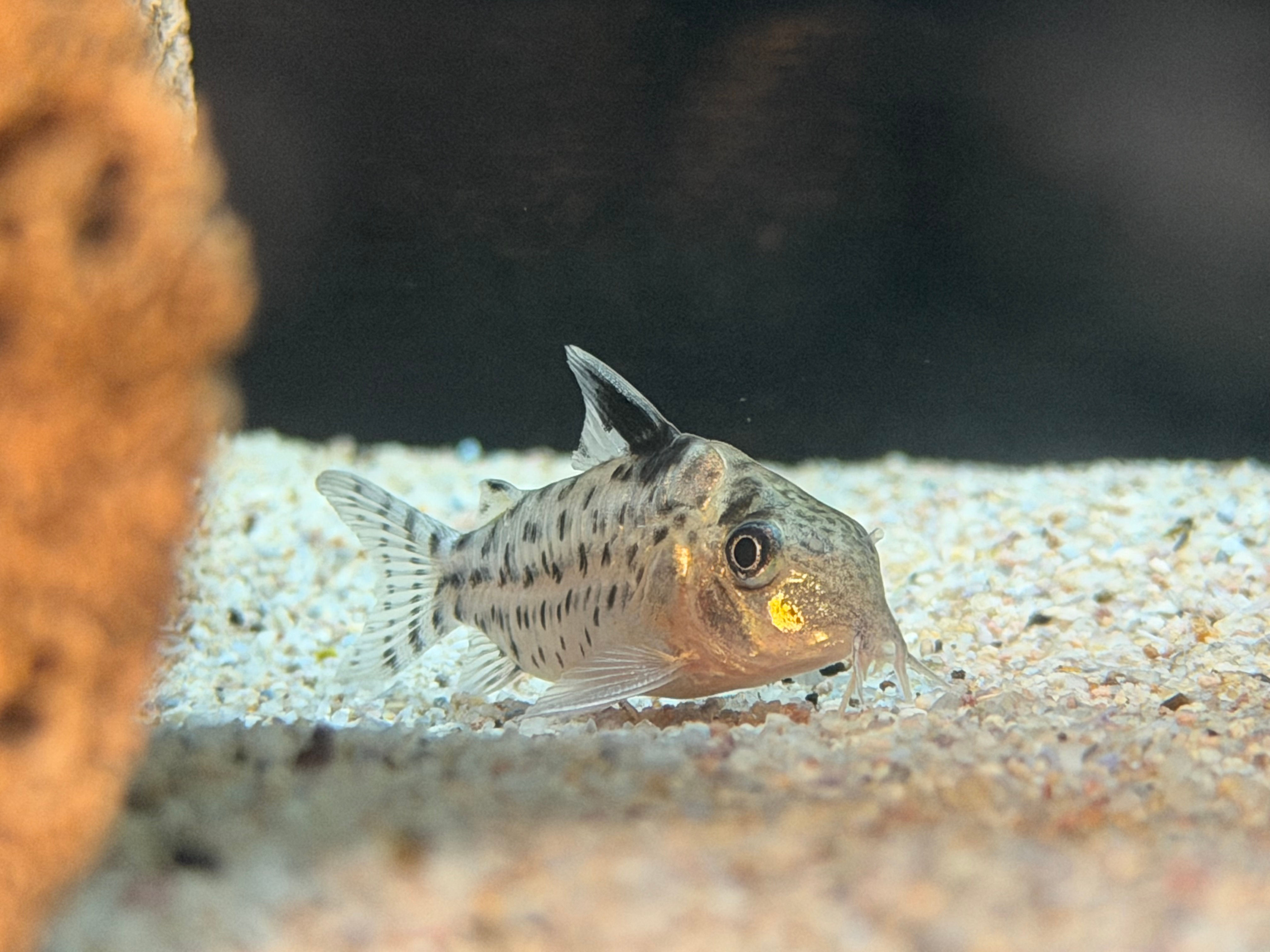

Agassiz’s Spotted Corydoras
Corydoras agassizii
Common names: Agassiz’s Cory, Spotted CorydorasOverview
Agassiz’s Corydoras is a beautifully patterned spotted catfish from the western Amazon Basin. It’s known for its delicate black spotting over a pale gold-silver body and a distinctive black eye mask. This species is slightly more slender than many common Corydoras, with elegant fin shapes and very active schooling behaviour.
Peaceful, hardy, and social, they are an excellent choice for planted community tanks.
Distribution
Western Amazon Basin
Peru & Brazil (especially around Rio Ucayali systems)
Found in slow-flowing creeks, leaf litter zones, and soft sandy substrates
Size
5.5–6.5 cm standard adult size
Lifespan
8–10 years with good care
Appearance
Pale cream/bronze body
Dense pattern of dark grey or black spots
Black horizontal eye band
Clear to slightly yellowish fins
Males are typically smaller and slimmer
Behaviour & Temperament
Extremely peaceful bottom-dwellers
Schooling fish: keep in groups of 6+
Active foragers
Comfortable in well-oxygenated water
Ideal community species
Aquarium Requirements
Tank Size
70–90 L minimum for a group
Larger tanks help promote natural schooling
Water Parameters
Temperature: 22–26°C
pH: 6.0–7.2
GH: 2–10 dGH
Soft, slightly acidic preferred but adaptable
Substrate
Fine sand is strongly recommended
Prevents barbel damage and encourages natural foraging
Décor
Driftwood
Leaf litter
Smooth stones
Dense planting around edges
Open sand area in the center for behaviour display
Filtration & Flow
Gentle to moderate flow
Clean, well-oxygenated water
Keep nitrates low (<20 ppm ideally)
Diet
Omnivorous micro-predators:
High-quality sinking pellets
Repashy community blends
Frozen bloodworm, blackworm, brine shrimp
Live microworms & daphnia
Occasional blanched vegetables
Feed 1–2 times per day.
Tankmates
Perfect with:
Small–medium tetras
Pencilfish
Hatchetfish
Rasboras
Peaceful dwarf cichlids (Apistogramma, rams)
Other Corydoras species
Whiptail catfish & small plecos
Shrimp (except very tiny newborns)
Avoid:
Aggressive cichlids
Loaches that may outcompete or harass them
Barb nippers
Breeding
Breeding follows typical Corydoras behaviour, though this species can be slightly more challenging.
Requirements
Condition with frozen/live food
Large, cool water changes to simulate rainy season
Dim lighting
Group spawning works best (2–3 males per female)
Spawning
Fish form the T-position
Female deposits sticky eggs on glass, plants, or hardscape
Remove eggs or parents for best hatch rate
Eggs & Fry
Eggs hatch in 3–5 days
Fry start on infusoria, then baby brine shrimp
Sand substrate is safest once they grow
Care Level
Easy to Moderate
Main challenges:
Requires soft sand
High oxygenation
Sensitive to high nitrates